I had heard of this place for many years. Whispers on the wind. Hushed voices in dark places. Softly spoken legends. Muttered myth.
Once, a long time ago, I visited the small coastal village of West Wemyss. After concluding some personal business involving the report of a giant herring which had been terrorizing the local fishing fleet, I headed into a small pub built right on the edge of the harbour wall. The low building holding a permanent vigil of the North Sea and the treacherous waves that crashed in at high tide, hungry, voracious, intent on devouring the land before it. The curved wall of the harbour the only defence against its power.
The pub was tiny and cramped. Made entirely of old limestone, roughly hewn, the walls more stacked precariously than built. Thick oak beams holding up a centuries old wattle and daub roof. A roof having seen much, a roof holding many secrets. A roof definitely giving shelter to a large variety of rodents and bugs.
It was the sort of old building with low ceilings and tiny doors that you often see in old villages. The kind of building where you learn the art of stooping pretty quickly, taught by the low beams and lintels literally bashing it into your head.
The sort of building that makes you wonder just how short people were five centuries ago. Were they short, or just very good at walking on all fours for some reason?
While I was in that pub, enjoying a quiet and refreshing glass of Guinness and some prawn cocktail crisps. I was approached by a grizzled, old sailor.
The man was old, really old. Possibly the oldest human being I had ever laid eyes on. His features were craggy, worn by many years at sea, the harsh wind carving his face into a network of deep creases and gullies.
His skin was leathery and brown, tanned from a lifetime of working outside, unprotected from the elements. Thick, fluffy and unkempt grey hair, short on the top but tied into a long plait at the back, the world’s oldest mullet. Perhaps this man was the first. Patient zero of a virulent plague of mullets that spread across the globe, finding a cranny to live in wherever large trucks and country music were common.
His hands, tapping staccato rhythms on the table top, were covered in home-made tattoos. Badly drawn sailing ships and anchors. A backwards mermaid on his left wrist, the top half a fish and the bottom half, human legs. Across his knuckles were tattooed the words ‘carp’ and ‘hake’.
This man was a fisherman to his bones!
But the man’s eyes! Shining. Bright. Full of life. Full of stories and time well spent. Full of glaucoma.
He sat down beside me, uninvited, and started spouting tales of the Lady of Lawers, the lost village and the legends of Breadalbane. I bought him a basket of scampi and chips and a pint of bitter. His company was slightly scary. He farted a lot and smelled faintly of cheese, but watching his animated face tell his stories was infinitely better than looking at the landlady of the pub. She had a hatchet face and kept giving me the evil eye and the fear at the same time. She must have been practicing because that’s quite hard to do. I saw a future which involved the words, ‘your kind’ and ‘around here’ and possibly a large, hollow statue of a man, made out of wicker.
I watched his animated face as he spoke. I listened intently. I paid special attention when he spoke of the possibility of treasure being buried there. I performed the Heimlich manoeuvre on him when he choked on a piece of scampi.
He ate his repast, drank his drink and thanked me for the meal. I shook his hand. Then I wiped whatever goo it was he had transferred to me from his hand on his woollen jumper. He laughed heartily. Then he coughed even more heartily. When I had fished the scampi crumbs out of my hair and gave him his false teeth back, we left the pub together. We bade each other farewell and he disappeared behind a large boathouse as the storm clouds began to roll in from the sea.
I headed home. I was undecided about whether the tales the old man had told held some truth or if it was simply an old man who had figured out a nice little con to get free meals from strangers in a pubs.
Either way, it piqued my interest and I decided to investigate.
Lawers (pronounced ‘Lors’) is a small village in Perthshire, Scotland, between Killin and Kenmore. It consists of a village pub, a few scattered houses and farms and way too many dogs then there should be in a village of its size. Some say they arrived one night on a mysterious aircraft but that’s another story.
It’s not this village I was interested in. It’s ‘Old Lawers’ that holds that honour. A thirty minute walk down a twisty, dirt road from the ‘new’ Lawers.
I stopped at the pub for a shandy and a lime flavoured vol-au-vent and headed off on foot down the path.
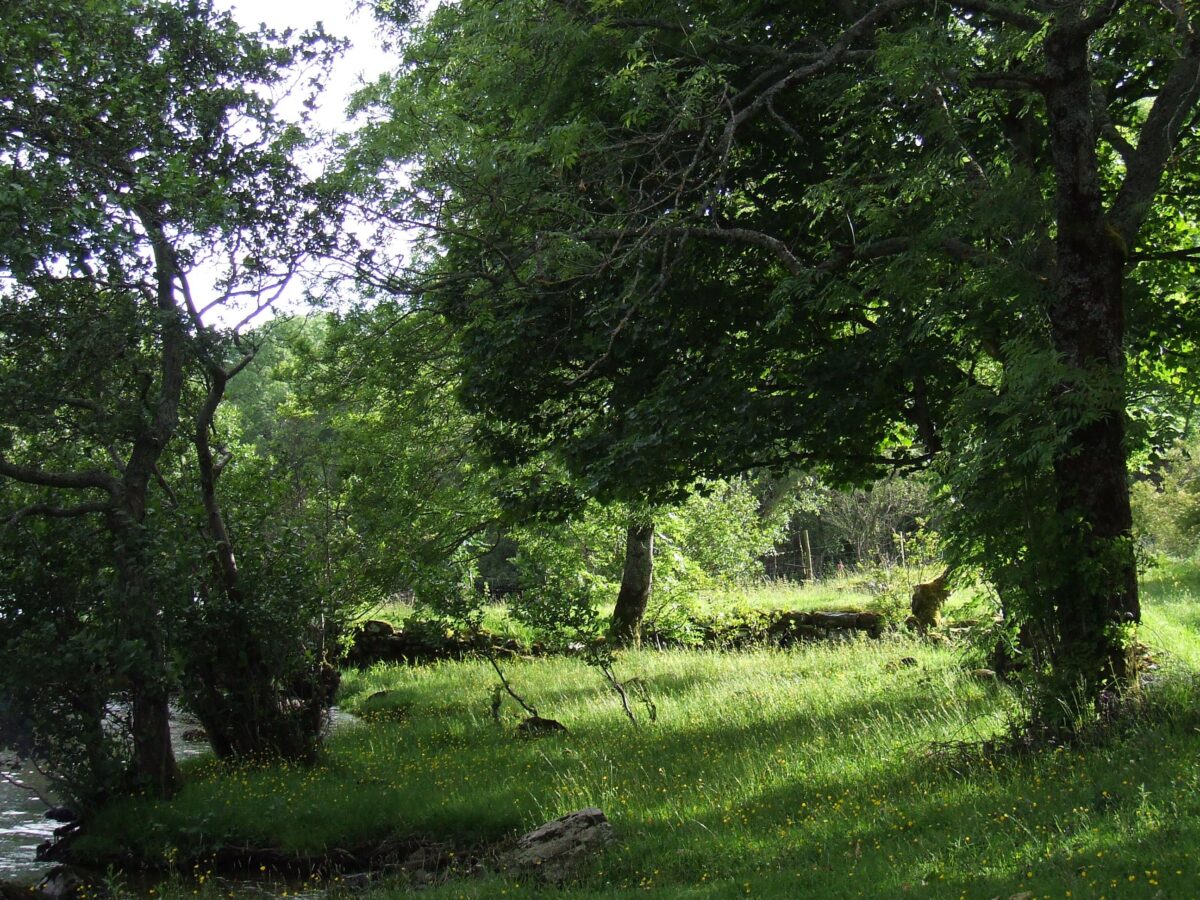
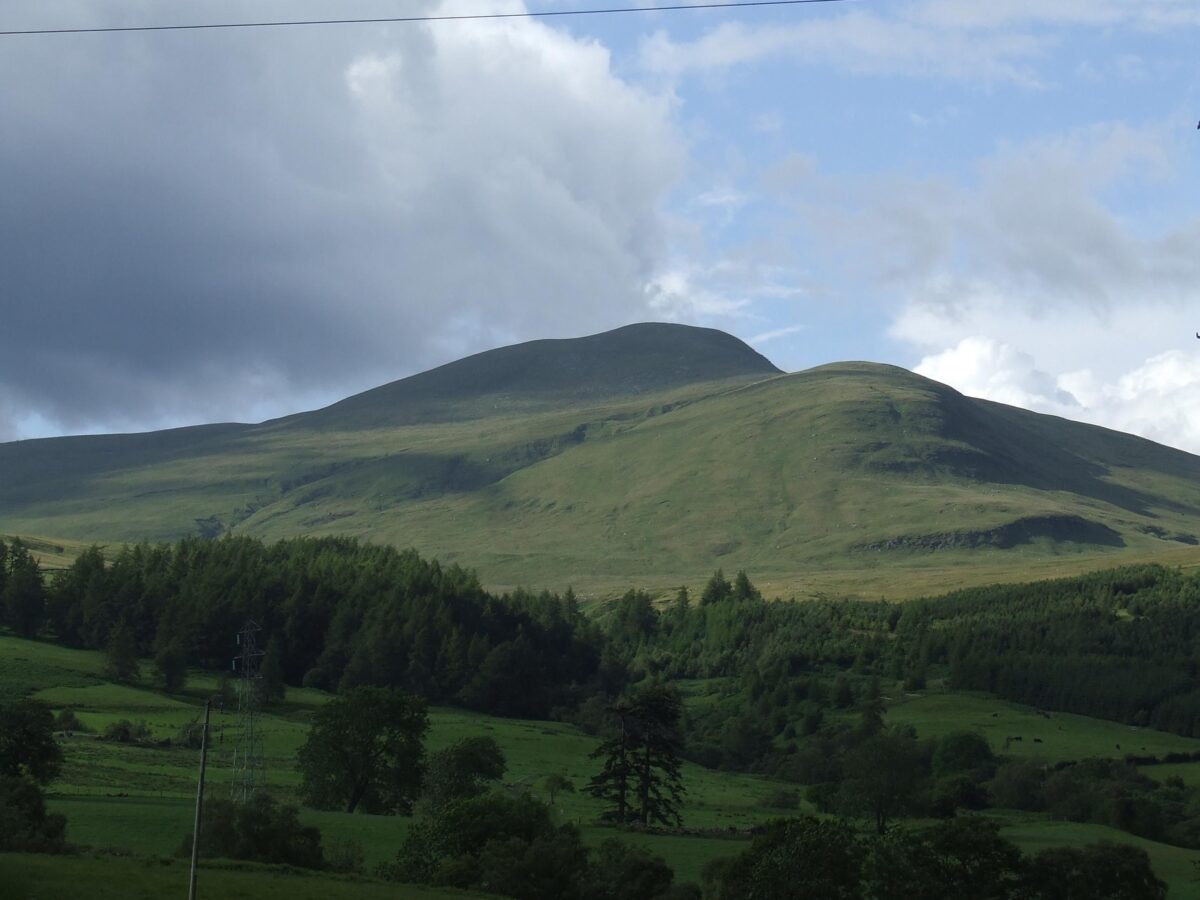
The path started on high ground and led downhill, as it usually does in these situations, down to the banks of Loch Tay. The water dazzling and shining silver in the weak, afternoon sunlight. The looming, grumpy looking peak of Ben Lawers towered above, its companions gathered around it. Each one standing on mountainous tippy-toes as they strained to reach its lofty heights.
I pressed on down the path. My mind full of ghost stories and all the things I had read about the ‘haunted’ village.
The air didn’t change in any way, not growing calmer and quieter. The birdsong didn’t disappear and I didn’t start to feel an icy chill in my bones as I headed down to the waterline. The hairs on the back of my neck didn’t stand on end as I saw the overgrown shadows up ahead. The hulking ruins of buildings, all square and straight edges, standing out against the twisting foliage.
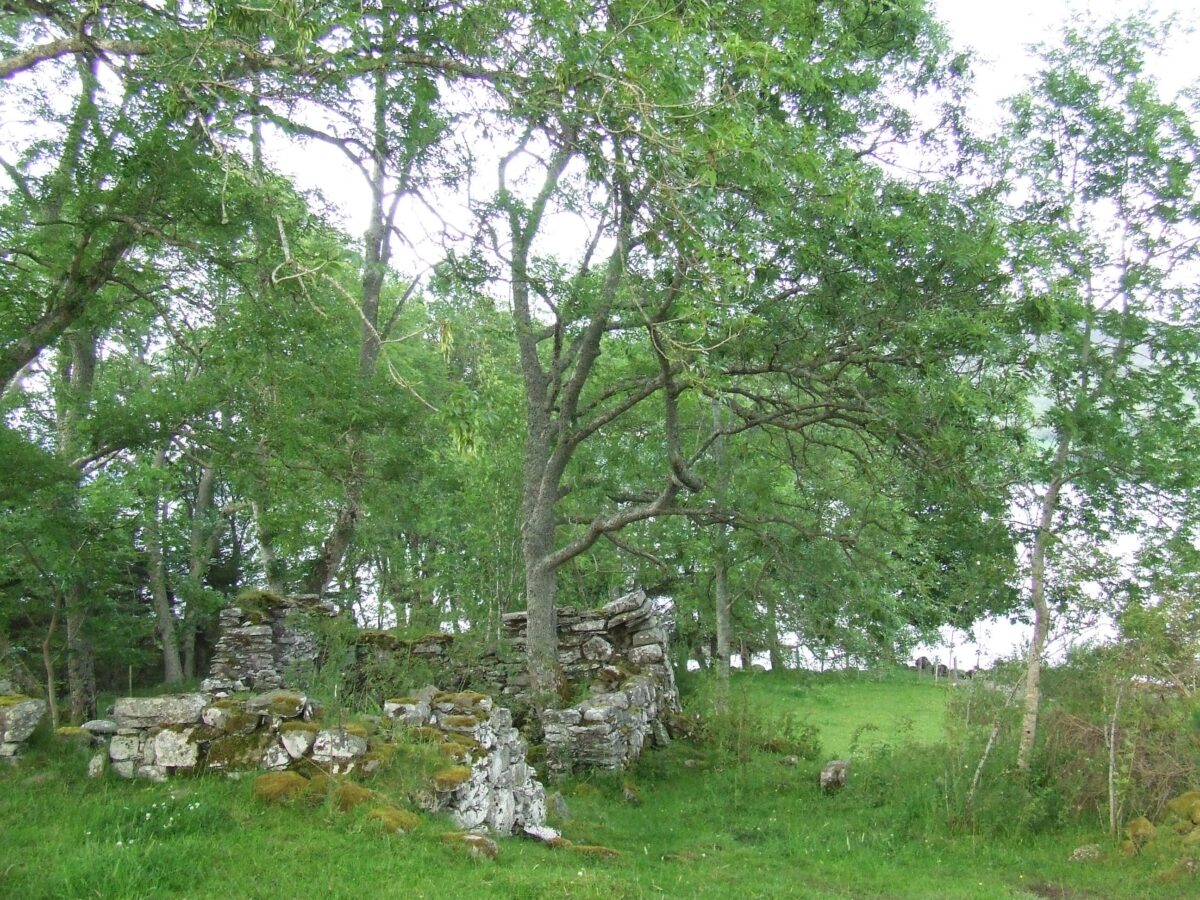
I didn’t start to feel a presence as I got closer. Walking under the trees. The light growing gloomy in their shadows. I didn’t feel like someone, something, was watching me.
I looked back towards the overgrown, dirt road I had walked down. My heart didn’t skip a beat when I realised that it was still there and hadn’t disappeared among the tall grass, not leaving me trapped in the village with no clear way to get back.
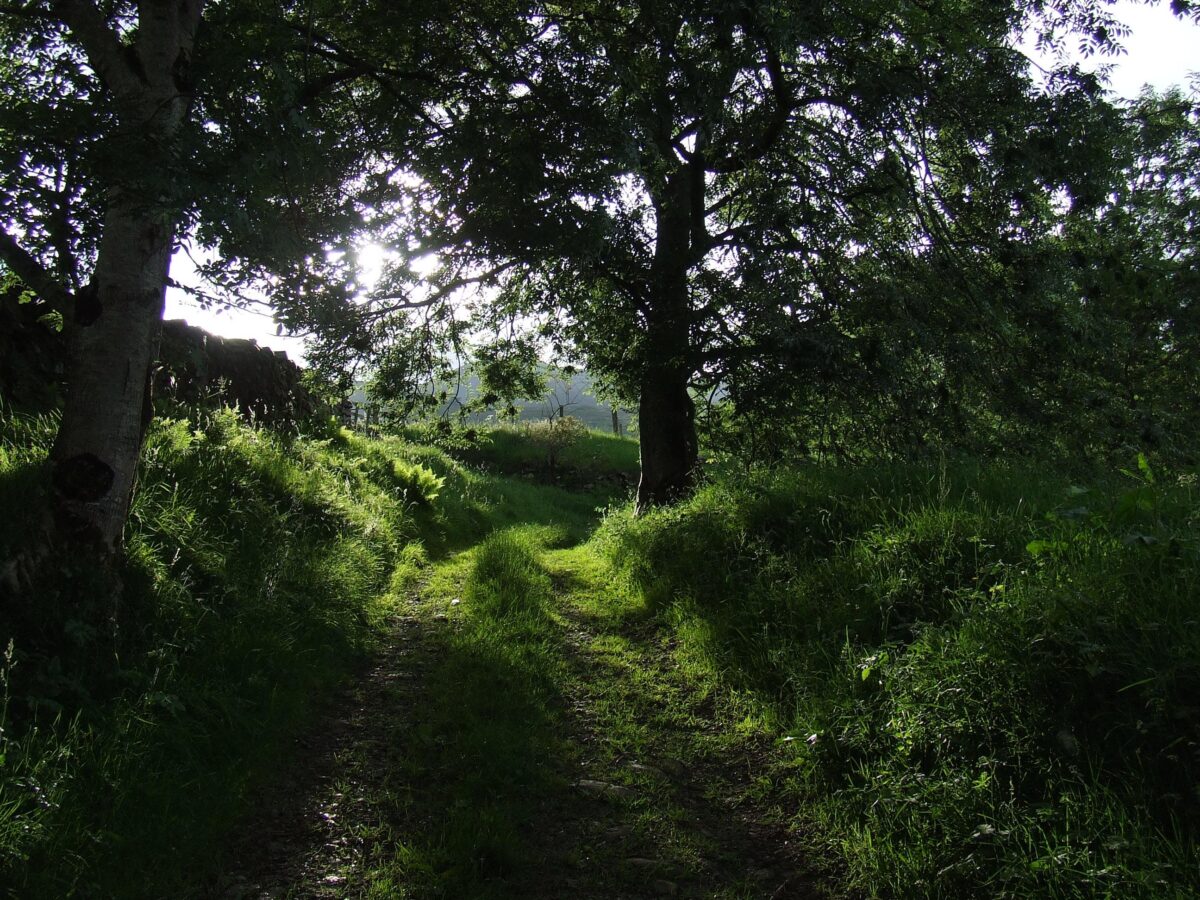
I kept walking. The nagging feeling not growing bigger and more intense with every step. The sound of my footfalls completely normal. The crunching of gravel, small stones and dried grass underfoot sounding exactly as it always had. It didn’t sound muted somehow. It didn’t sound like the noise came from further away, from some shadowy other realm, not an echo of footfalls from the past reverberating through time.
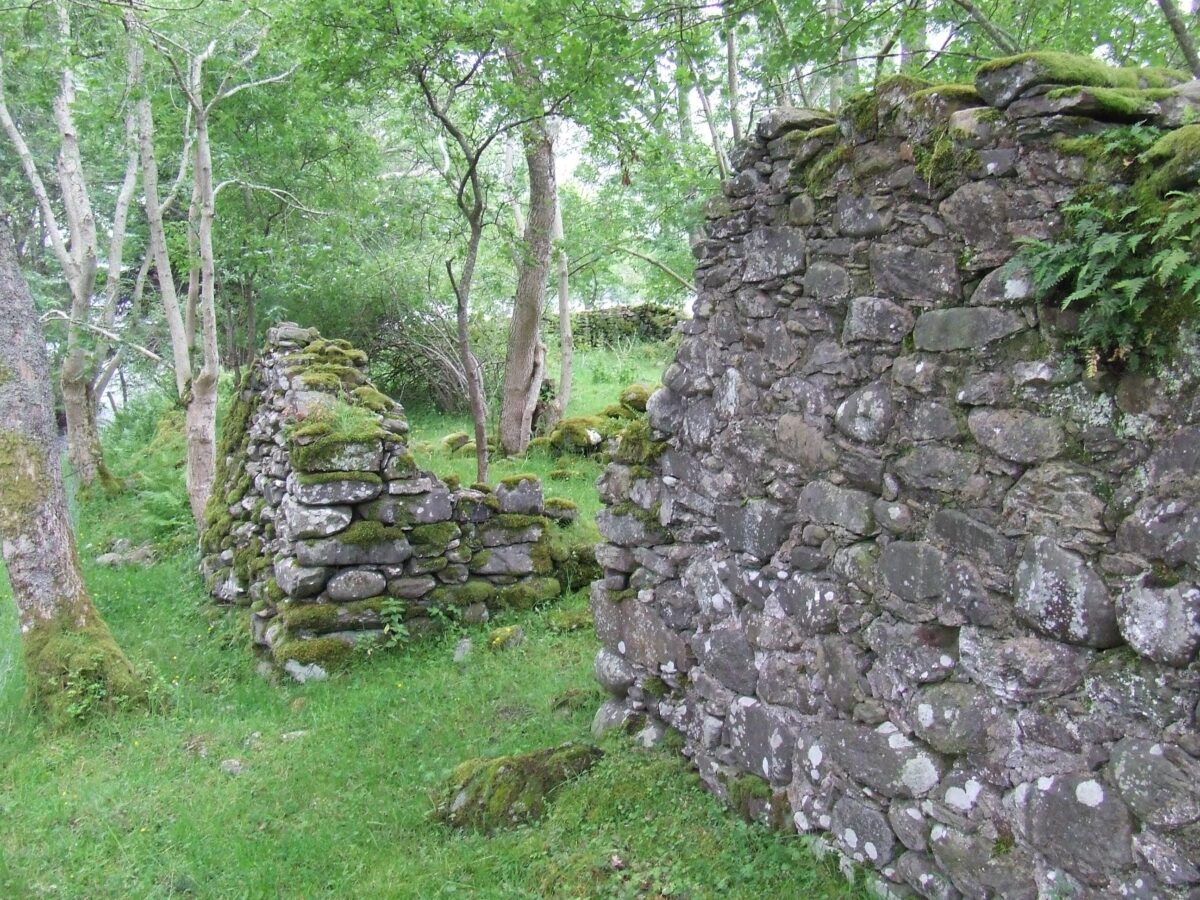
I entered the village proper. Ruined farmsteads all around. Broken. Crumbling. Yet not seemingly alive with malevolence. It didn’t feel like unseen eyes watched from every shattered window, from every collapsing doorway.
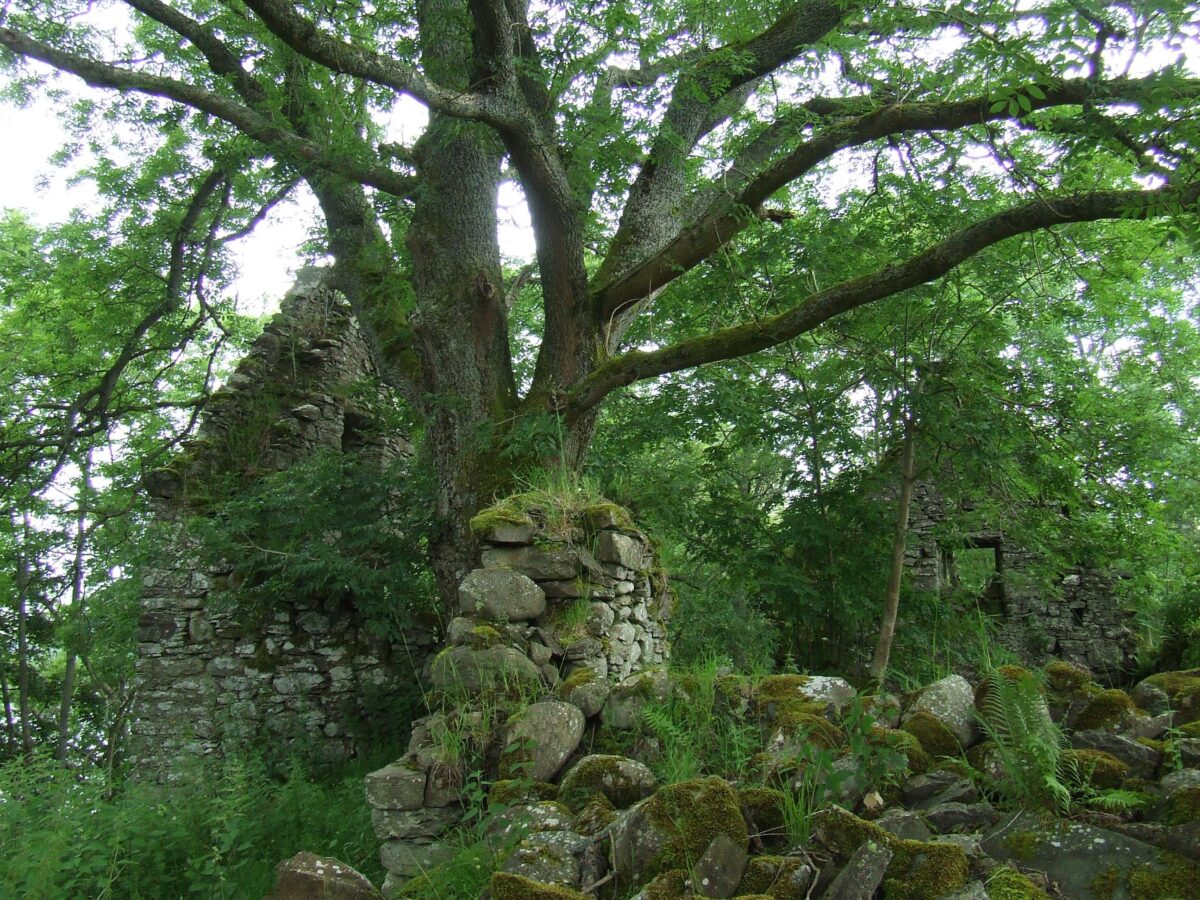
The stories of the Lady of Lawers echoed in my mind as I explored further. My heartbeat not increasing as I ventured further and further into the tangle of stones and trees that used to be a village.
I didn’t jump as I didn’t hear a sudden noise from my left. I didn’t laugh at myself when it turned out to not be a pigeon not flapping out of one of the ruins in a panic as I approached.
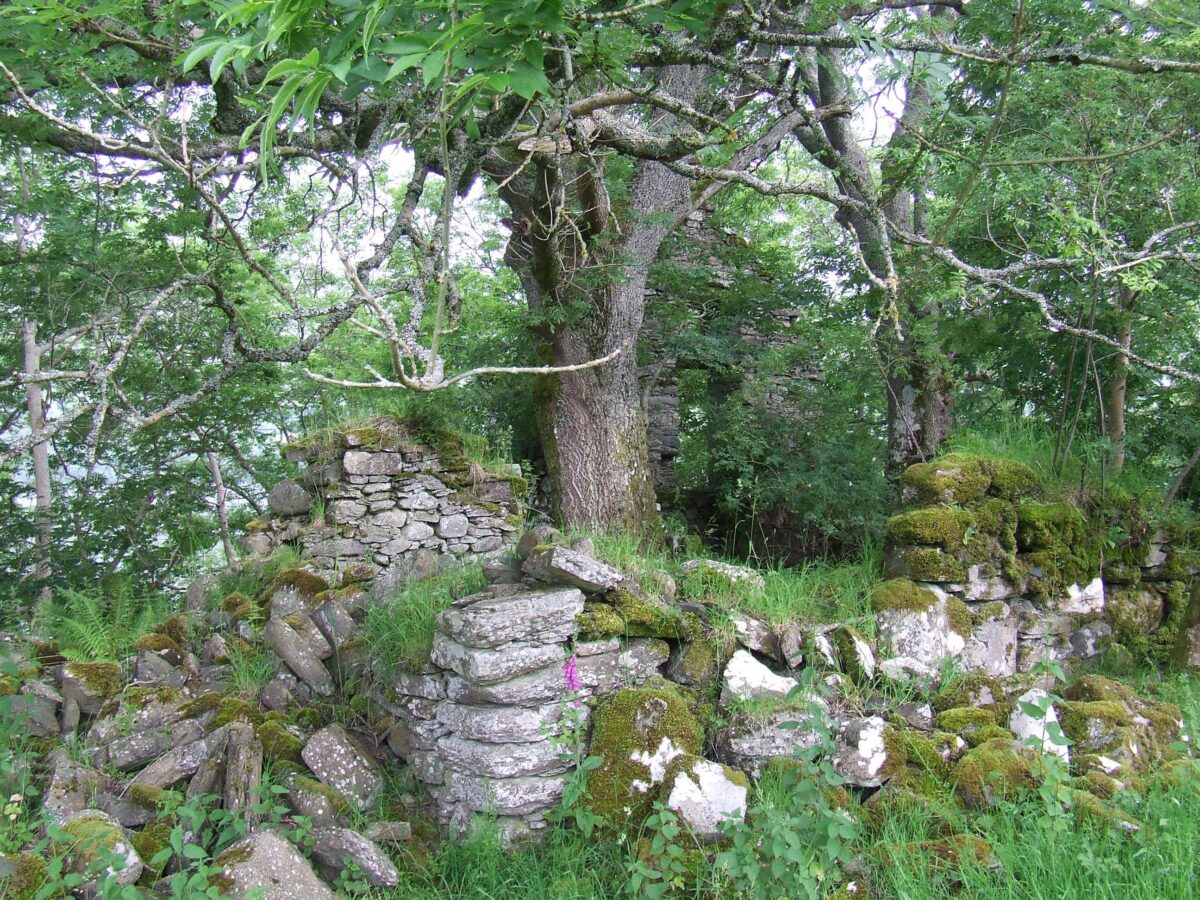
The sky grew darker as the sun dropped, heading off to sunnier climes. It’s always doing that. At least once a day! What’s wrong with it?
At this point, I wasn’t terrified. I didn’t see shadows around every corner. I didn’t keep catching movement out of the corner of my eye and didn’t turn sharply only to not find nothing there.
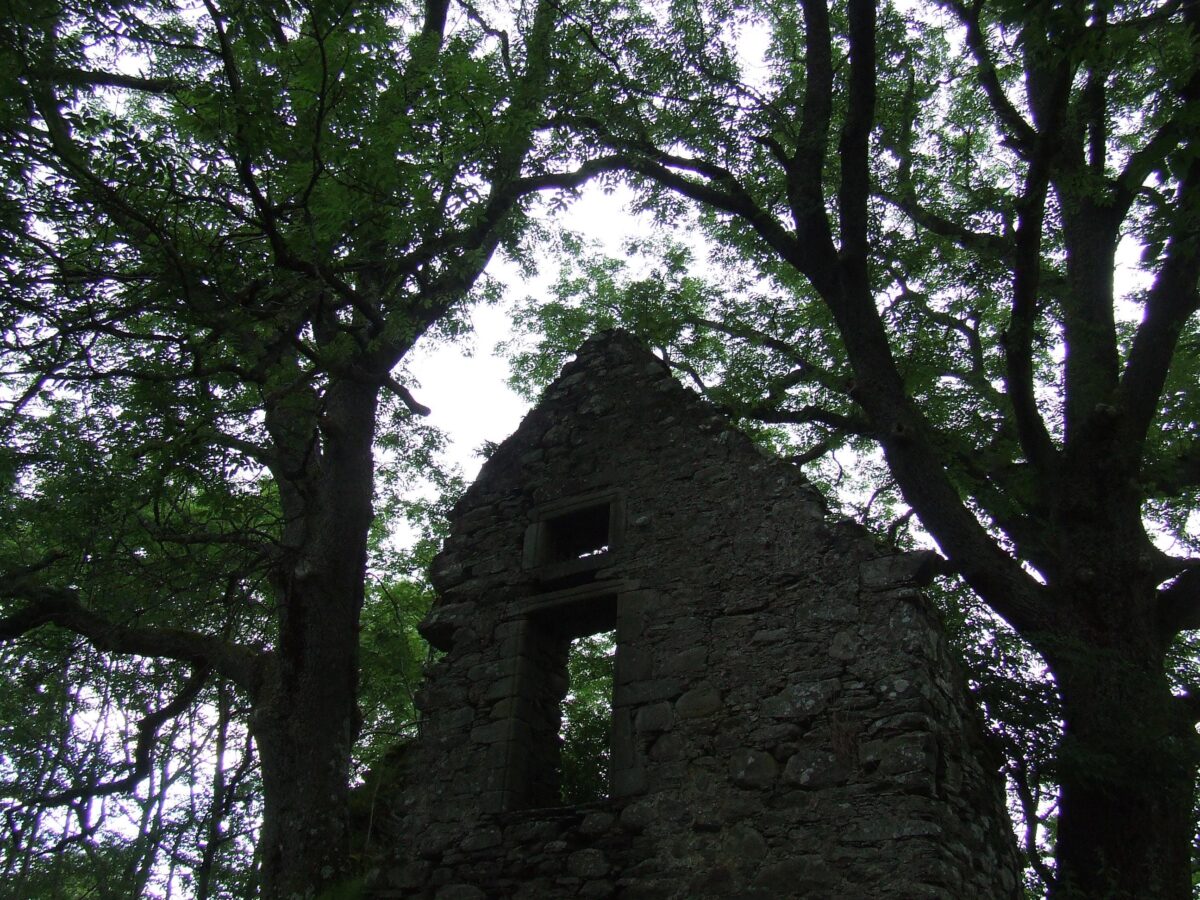
I didn’t see shapes among the darkness at the base of the forest that surrounded the village. The trees quickly taking back that which man had stolen. The boughs breaking the buildings down to rubble, gradually, inexorably. Nature will always win. In time.
I walked through the centre of the village, not trembling, not wishing I had never come here. I crossed a small bridge over a smaller river (it generally works that way around) and walked slowly towards the village graveyard. Storm clouds began to form above and a thin, weak rain, almost like mist, began to fall. The trees opened up and I could see the graveyard. Unkempt, overgrown, unloved, un-cared for.
As I approached the gateway, a large rusted, iron contraption, the fear I already didn’t feel didn’t begin to increase. The sense of being watched I hadn’t been feeling since I arrived in the village didn’t grow stronger as I didn’t realise that the graveyard might not be the epicentre of the non-supernatural events I hadn’t been experiencing.
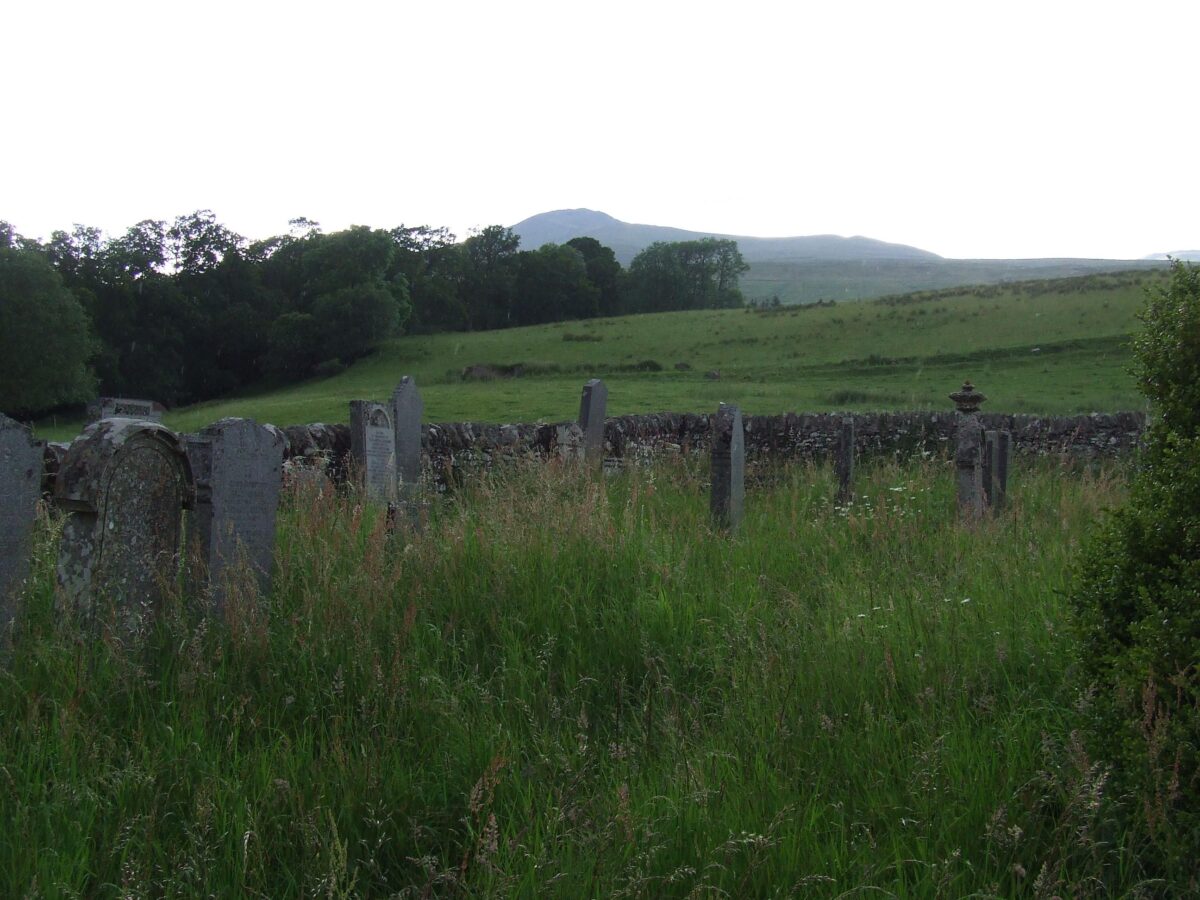
I waked into the graveyard, slowly, quietly. Hoping that my presence wouldn’t go unnoticed by whatever foul fiends dwelt within. And then I didn’t see it! Not a long, drawn out figure of a woman. Not dressed in ethereal rags and wailing as it didn’t rush towards me. It’s not gaping maw of a mouth not rearing open, not full of broken, fanged teeth and not emitting the foul stench of sulphur as it didn’t fly at me like a demon on a tricycle.
I looked around, not petrified, not trying to find the quickest way out of this place and back to the warm glow of civilisation.
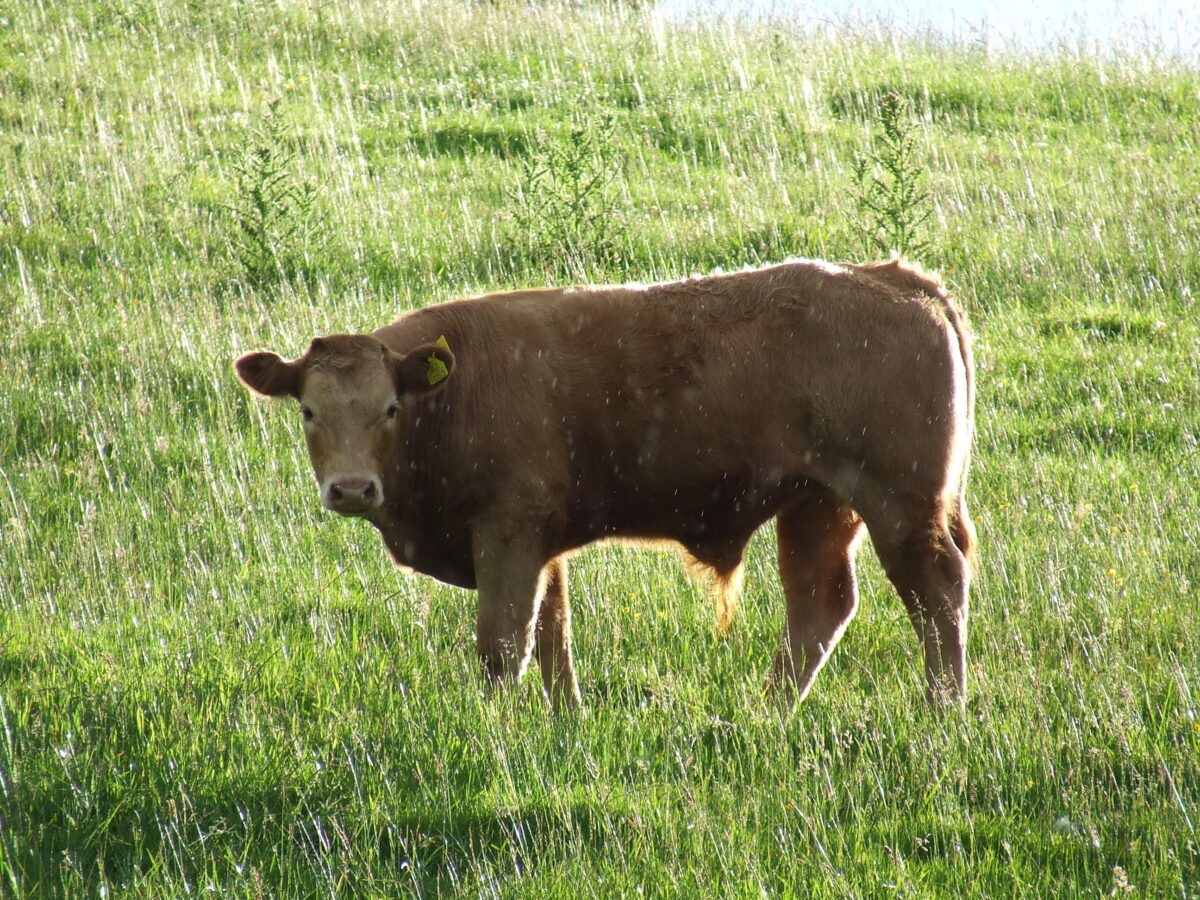
I saw a cow. Standing on the hillside above the graveyard. It looked straight at me. It wasn’t haunted. It said, ‘Mooo?’
I wandered around for a bit, took some photos and went home.
I bought a kebab on the way. It was very nice.